Have you ever caught a whiff of someone walking by and thought, wow, that smells amazing, and then immediately sneezed? Or maybe you’ve bought a fancy perfume that gave you a headache after an hour? You’re not alone.
More and more people are turning away from synthetic fragrances and learning how to make their own perfume at home. Using natural essential oils, alcohol (or oil bases), and a little creativity. The best part? You get a scent that’s completely you, and one that’s healthier for your skin, your mood, and the environment.
If you’ve ever wanted to create your own signature scent, this is your complete guide to doing it (no chemistry degree required).
Why Make Your Own Perfume?
Let’s be honest: commercial perfumes smell beautiful, but they’re often packed with things you don’t want on your skin: like synthetic chemicals, preservatives, and undisclosed “fragrance” ingredients that can trigger allergies or migraines.
When you make your own perfume, you control exactly what goes into it. That means:
- ✅ No harsh chemicals: just pure, natural ingredients.
- 🌿 Healthier for sensitive skin: essential oils can soothe instead of irritate.
- 💖 Personalized scent: completely unique to you.
- 🌎 Eco-friendly: fewer toxins, less packaging, and sustainable ingredients.
And here’s the bonus: essential oils don’t just smell good, they can actually support your mood and well-being.
What You’ll Need to Make Your Own Perfume
Here’s your basic perfume-making starter kit:
Ingredients:
- Essential oils (your “notes”)
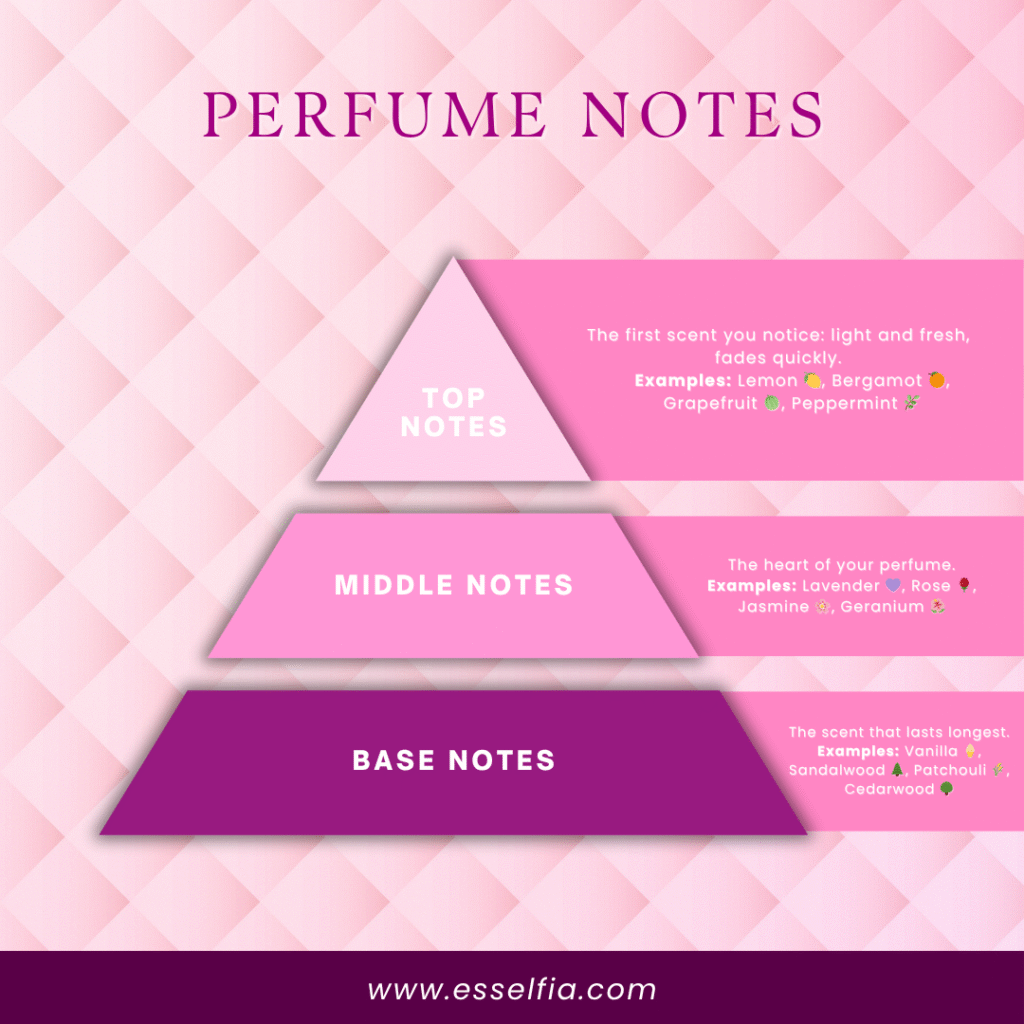
- Top notes (fresh, light, evaporate quickly): lemon, grapefruit, bergamot, peppermint
- Middle notes (heart of your perfume): lavender, rose, jasmine, geranium
- Base notes (long-lasting, grounding): vanilla, patchouli, sandalwood, cedarwood
- Carrier or base
You’ll need something to dilute your essential oils, pure oils are too strong on their own.
- Alcohol base: vodka (unscented, high-proof) or perfumer’s alcohol
- Oil base: jojoba oil, fractionated coconut oil, or sweet almond oil
- Distilled water (optional, to soften the scent)
- Glass perfume bottles (dark amber or blue protects your blend from light)
- Glass droppers or pipettes for measuring
- Notebook or digital notes app to track your recipes (trust me, you’ll thank yourself later)
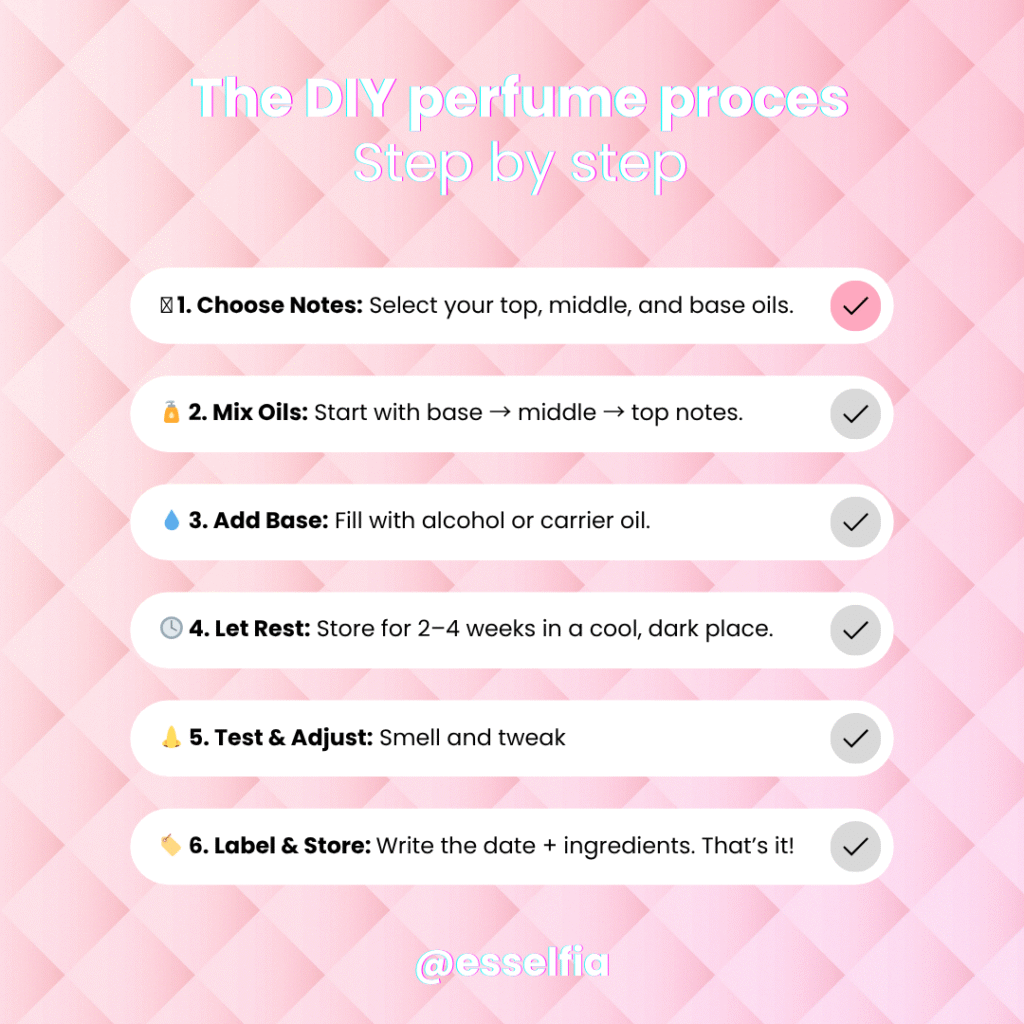
Step-by-Step: How to Make Your Own Perfume
Here’s how to turn your favorite scents into your new go-to fragrance:
Step 1: Choose Your Scent Notes
Perfumes are made up of three layers of scent, known as “notes”:
- Top note: what you smell first (fresh and light)
- Middle note: the main body of the scent (warm, floral, or spicy)
- Base note: what lingers longest on your skin (earthy, deep, comforting)
A good starting ratio is:
- 30% top notes
- 50% middle notes
- 20% base notes
Example combinations:
- 🌿 Fresh + Clean: Lemon (top), Lavender (middle), Cedarwood (base)
- 🌸 Romantic + Soft: Bergamot (top), Rose (middle), Vanilla (base)
- 🍂 Earthy + Grounded: Grapefruit (top), Geranium (middle), Patchouli (base)
Step 2: Mix the Oils
In a small glass bottle:
- Add your base notes first (these anchor your scent).
- Add the middle notes next.
- Finish with the top notes.
- Once you’re happy with your blend, add your base (alcohol or carrier oil).
For a 10 ml bottle:
- Add 10–15 drops of essential oils total (for light scent)
- Add up to 30 drops (for stronger perfume)
- Then fill the rest with your chosen base
Step 3: Let It Rest
This step makes a huge difference. Seal your bottle tightly and let it sit in a cool, dark place for at least 48 hours (ideally 2–4 weeks). This lets the oils blend and mature, just like fine wine.
Step 4: Test and Adjust
Once your perfume has settled:
- Dab a little on your wrist or neck.
- Let it sit for 10–15 minutes (it will evolve as it warms on your skin).
- Adjust by adding 1–2 drops of oils if it needs more brightness, warmth, or depth.
Step 5: Label and Store
Write down your blend’s ingredients and date (future you will want this info!). Store it away from heat and sunlight. Natural perfumes last around 6–12 months depending on ingredients.
Essential Oils and Their Mood-Boosting Effects
Each essential oil has its own unique aroma and emotional benefit. Here are some of the most popular options to use when making your own perfume:
💜 Calming & Relaxing
- Lavender – Reduces stress and promotes deep relaxation.
- Chamomile – Soothes anxiety and helps with better sleep.
- Sandalwood – Grounds emotions and eases restlessness.
🌞 Energizing & Uplifting
- Sweet Orange – Boosts mood and helps reduce fatigue.
- Lemon – Refreshes the mind and supports focus.
- Peppermint – Stimulates alertness and mental clarity.
🌹 Romantic & Comforting
- Rose – Promotes self-love, warmth, and emotional balance.
- Ylang-Ylang – Encourages sensuality and reduces tension.
- Vanilla – Adds comfort, sweetness, and calm.
🌲 Centering & Restorative
- Cedarwood – Brings stability and grounding energy.
- Frankincense – Deepens breathing and helps reduce overwhelm.
- Patchouli – Enhances mindfulness and inner peace.
💡 Pro Tip: When blending, try mixing one scent from each category (e.g., citrus + floral + wood) for a balanced and layered fragrance that smells amazing and supports your mood throughout the day.
Simple Perfume Recipes to Try
You can really play with scent vibes, color, and even emotion. Below are ready-to-use DIY perfume recipes you can try and use.
How to Wear Natural Perfume
- Apply to pulse points: wrists, behind ears, or collarbone.
- Don’t rub your wrists together (it breaks down the top notes).
- Layer with an unscented lotion or body oil to make it last longer.
- Reapply throughout the day for a refresh.
Final Thoughts: Your Scent, Your Energy
Making your own perfume is more than just a DIY project, it’s a creative ritual. You’re not only crafting a scent; you’re creating something that feels like you.
So next time you’re browsing the perfume aisle, maybe skip the mystery bottle and reach for your own blend instead. Your body (and your mood) will thank you.